Gas recovery for float glass production
Reduce gas supply costs with float line gas recovery
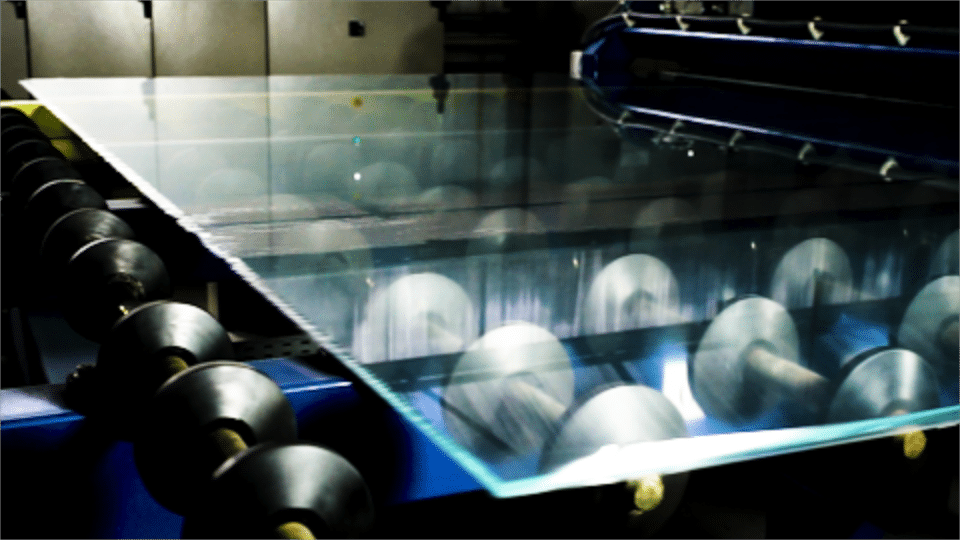
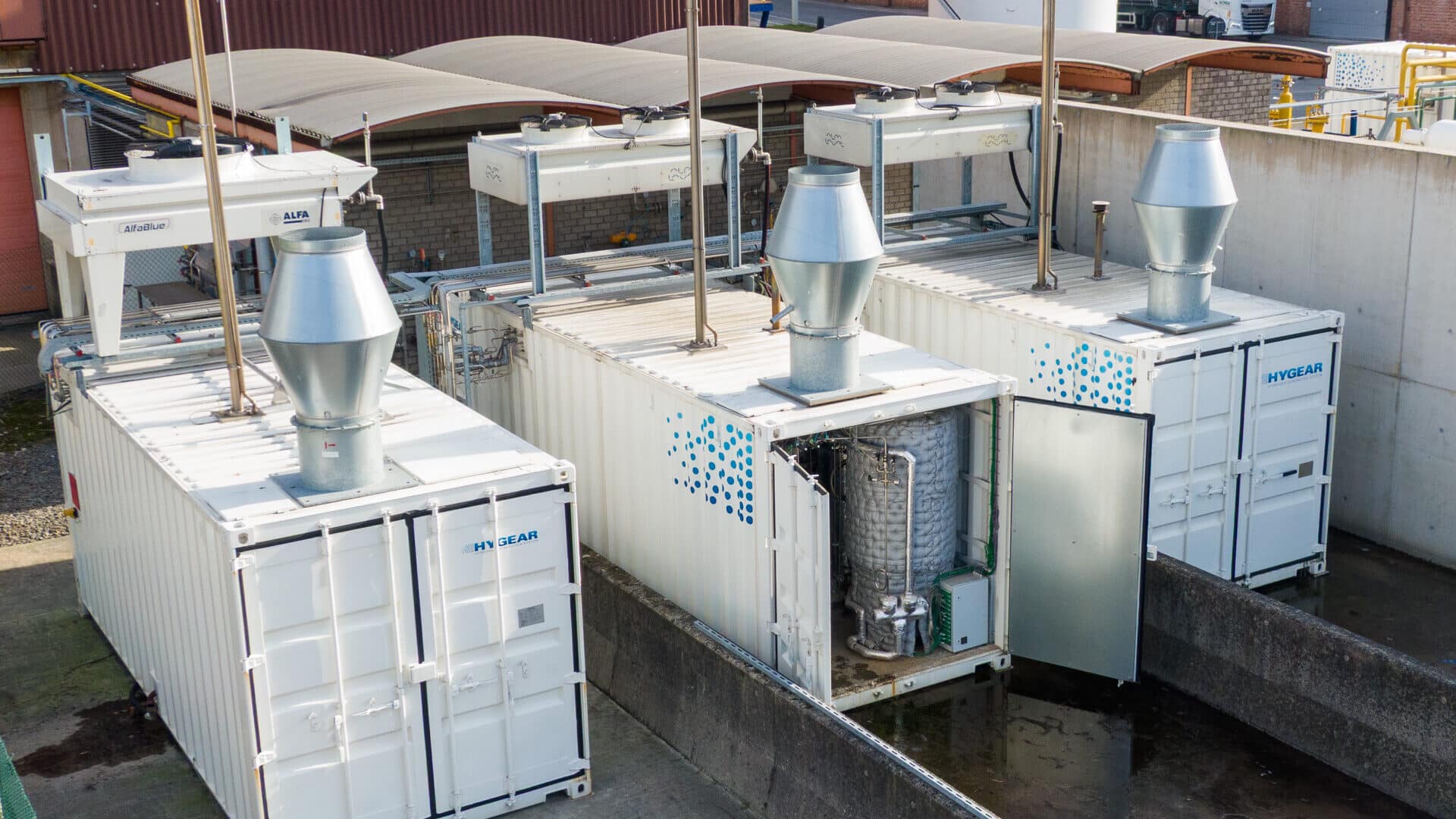
The tin bath atmosphere in float glass production must be maintained at close tolerances. Sourcing and transporting fresh hydrogen and nitrogen to sustain that atmosphere is an ongoing operational expense. Hy.REC® captures vent gas from the float line, removes impurities, and recycles it back into your process at the required quality level. The result is a marked reduction in gas supply volumes, lower utility costs, and a smaller carbon footprint. Our hydrogen recycling design is a supplementary process, so it does not directly interfere with the float glass production process.
How Hy.REC® recovers and purifies hydrogen-nitrogen gas mixtures
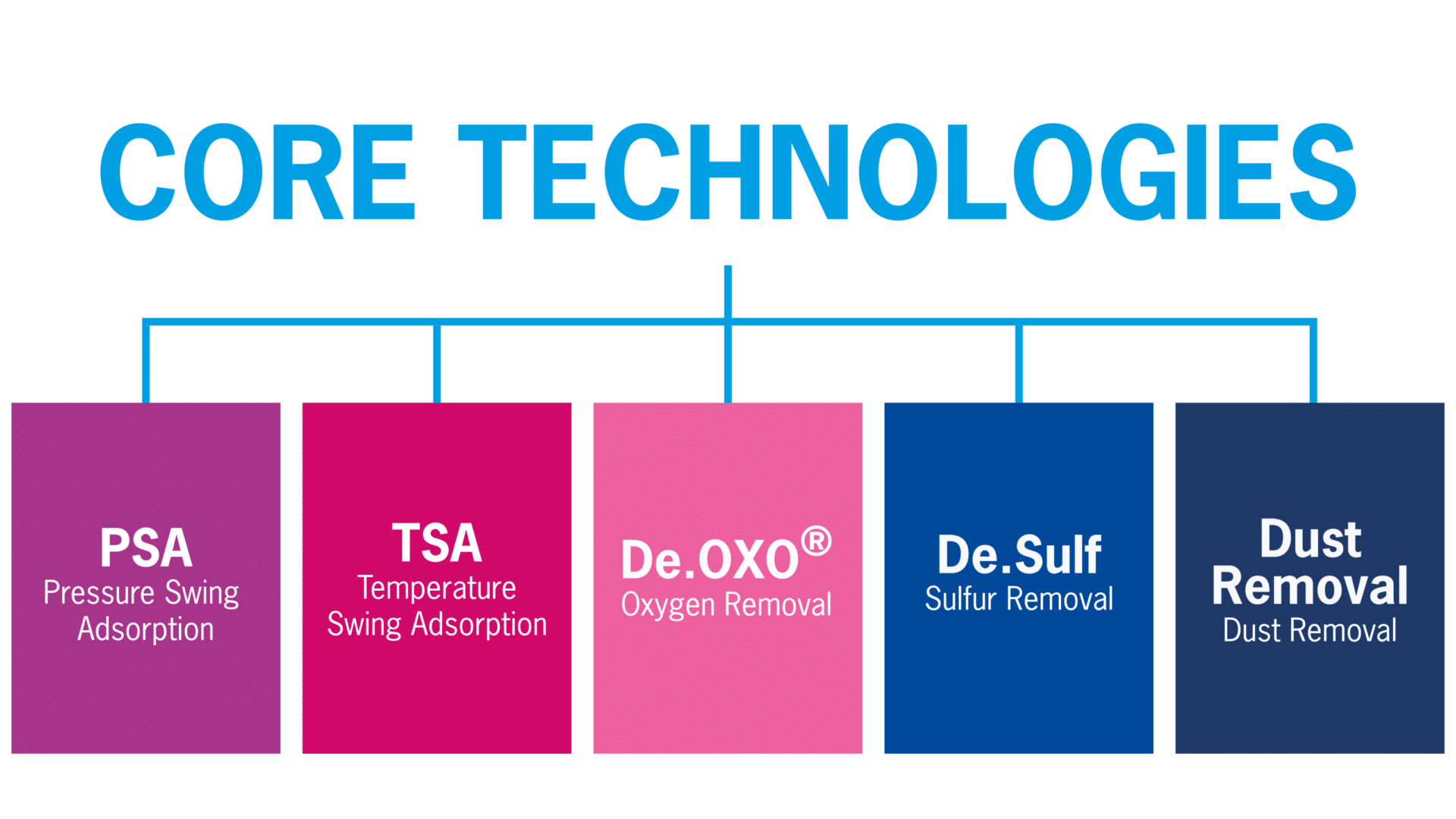
Hy.REC® is built on selected in-house technologies, each addressing a specific challenge in glass industry gas recovery.
- Dust removal using a self-cleaning heat exchanger for high-dust gas streams
Float glass manufacturing produces highly dust-loaded gas streams. The gas first passes through a self-cleaning heat exchanger, which recovers heat while preventing dust build-up on the heat transfer surfaces. After the heat exchanger, the remaining dust is removed by a dust filter and collected in a dust bin. This configuration reduces electricity consumption, minimizes maintenance, and improves overall heat recovery efficiency. - Sulfur removal for reliable process operation
When sulfur concentrations exceed acceptable limits, a dedicated sulfur removal unit can be integrated into the system. This protects downstream equipment, improves gas quality, and ensures reliable operation of the gas purification process. - Integrated oxygen removal for high-purity gas output
The integrated De.OXO® deoxygenation module removes residual oxygen from the gas stream, producing a high-purity hydrogen–nitrogen mixture that can be safely recycled into the float glass process. This ensures the recovered gas meets the purity requirements of the float line. - Temperature Swing Adsorption (TSA) for moisture and impurity removal
The TSA system uses two vessels filled with adsorbent. While one vessel removes moisture and trace impurities from the process gas, the other is regenerated using a hydrogen and nitrogen gas mixture, so valuable process gas is retained. This alternating operation enables continuous gas purification without interrupting the process. Following TSA treatment, the purified gas can be returned either to the gas mixing station or directly to the float glass process.
Advantages
Improved glass quality as a direct outcome of gas recycling
Maintaining a consistent, high-purity protective atmosphere in the tin bath is directly tied to flat glass quality. Hy.REC® ensures the recycled gas meets the purity specification your process demands. Glass manufacturers using HyGear’s Hy.REC® systems benefit from improved glass quality alongside the reduction in operating costs.
HyGear has supplied gas recycling systems to leading glass manufacturers including Saint-Gobain (Germany), Obeikan Glass (Saudi Arabia), AGC Glass Europe (Belgium), Guardian Glass (Luxembourg), and Düzce Cam (Turkey).
Hy.REC® gas recycling at a flat glass facility, Saudi Arabia
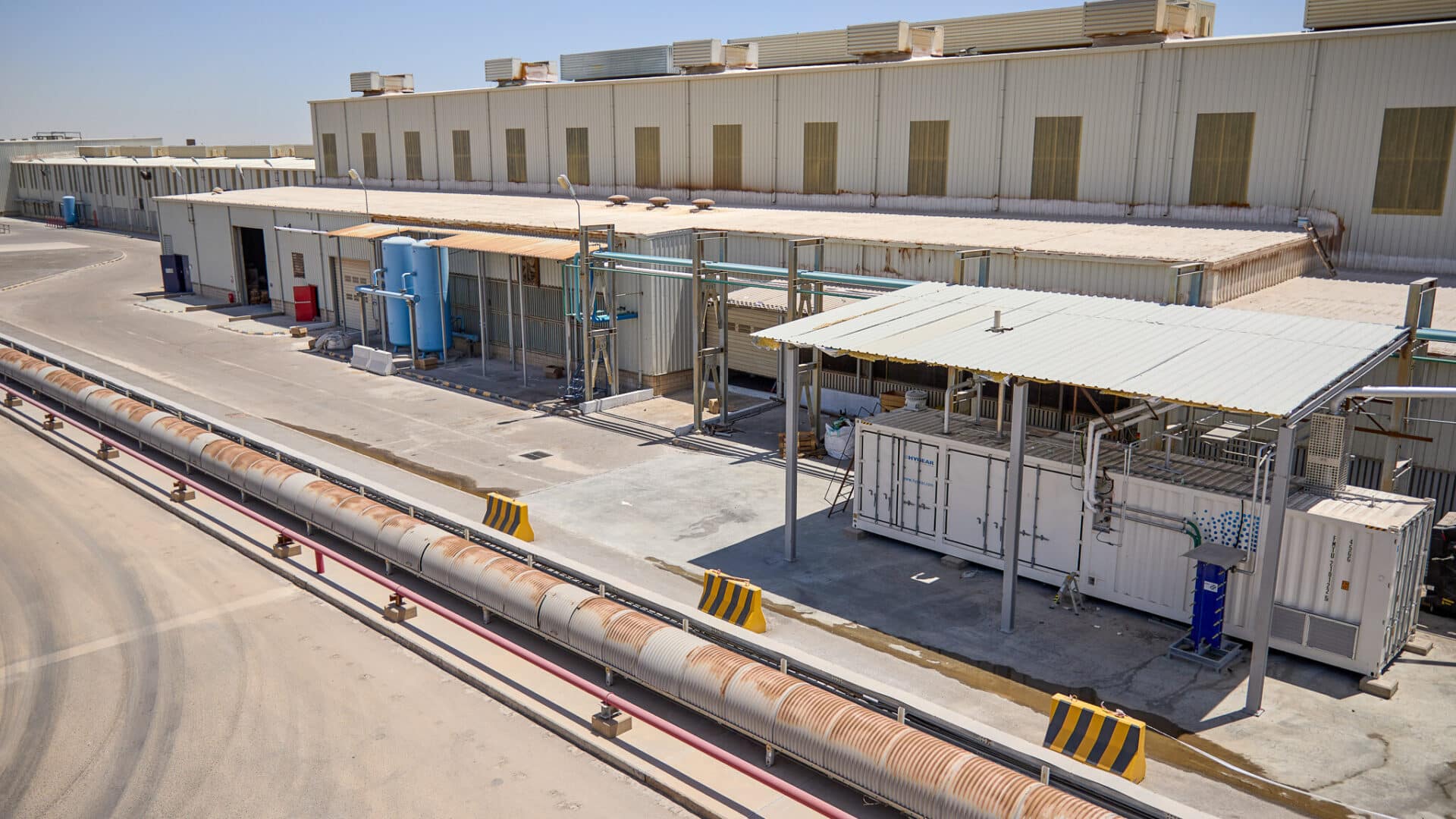
A flat glass manufacturer in Saudi Arabia installed a Hy.REC® system to recover the hydrogen-nitrogen protective atmosphere from its float line tin bath. Without recovery, this gas is vented after each production cycle, creating an ongoing cost that compounds with output volume.
The Hy.REC® captures the contaminated gas stream, removes impurities, and returns it to the process at 99.999% purity and a maximum flow of 700 Nm³/hr. Recycling the protective atmosphere reduces the volume of fresh gas the facility needs to source, cutting both supply costs and CO₂ emissions. A consistent, high-purity atmosphere in the tin bath also contributes directly to improved glass quality.